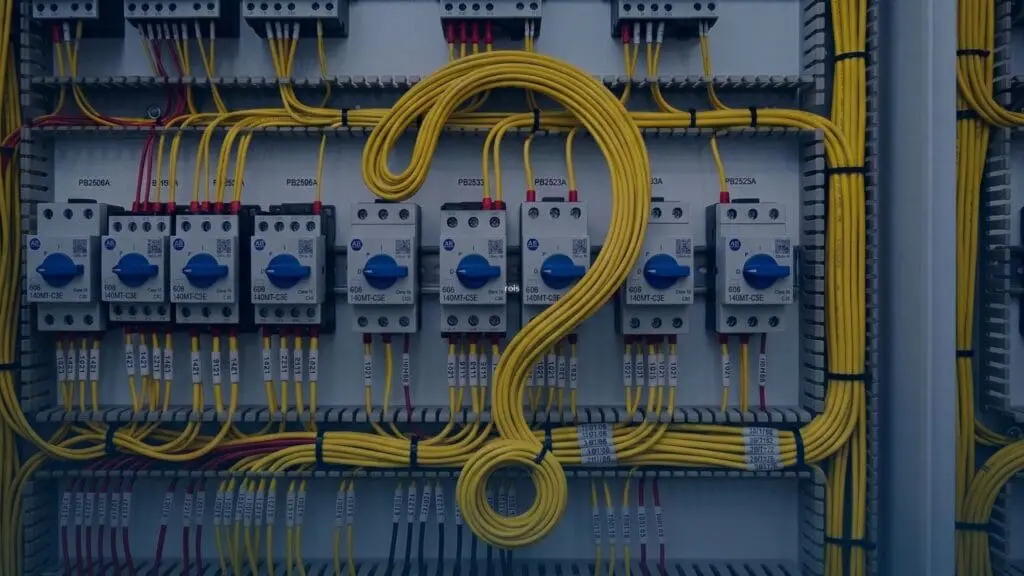
A network panel is an enclosed assembly that organizes, terminates and protects the active and passive hardware connecting devices on an industrial network. The network panel houses switches, routers, patch panels, fiber distribution units and cable management as a single, factory-tested unit that keeps control system, SCADA and OT data moving reliably.
Industrial network architecture dictates how a network panel is built and what the panel must contain. A plant network panel is engineered for the protocols, port counts and environmental loads of an operating production floor, not a server room.
- Active hardware: Managed or unmanaged Ethernet switches handle VLAN segmentation, port-level diagnostics and industrial protocol traffic such as EtherNet/IP, PROFINET or Modbus TCP.
- Passive hardware: Patch panels terminate Cat6, Cat6A or fiber cabling, and provide a structured cross-connect point between field devices and active equipment.
- Power and protection: 24 VDC power supplies, surge suppression and UPS modules keep switches online during transient events.
- If/then: If a single uplink between the network panel and a remote enclosure fails, then a redundant ring topology (RSTP or DLR) reroutes traffic within milliseconds to prevent SCADA polling errors.
- Documentation: Mechanical drawings, port assignment maps and IP addressing schedules ship with the assembly.
For full panel-build capability across the plant floor, visit our Control Panels page.